
A winter visit to Lucerne — discovering the charm of Kapellbrücke, the beauty of Lake Lucerne, and one of the most picturesque cities in Switzerland.
Imagine a city where medieval wooden bridges cross turquoise waters and snow-covered mountains frame the horizon, as if embracing the town. It feels truly like stepping into a storybook.
That was our first impression of Lucerne.
It quickly became clear why Lucerne is often called one of the most beautiful cities in the world. Small yet striking, it’s frequently described as Switzerland’s “pocket-sized gem,” and after visiting, we completely understand why.
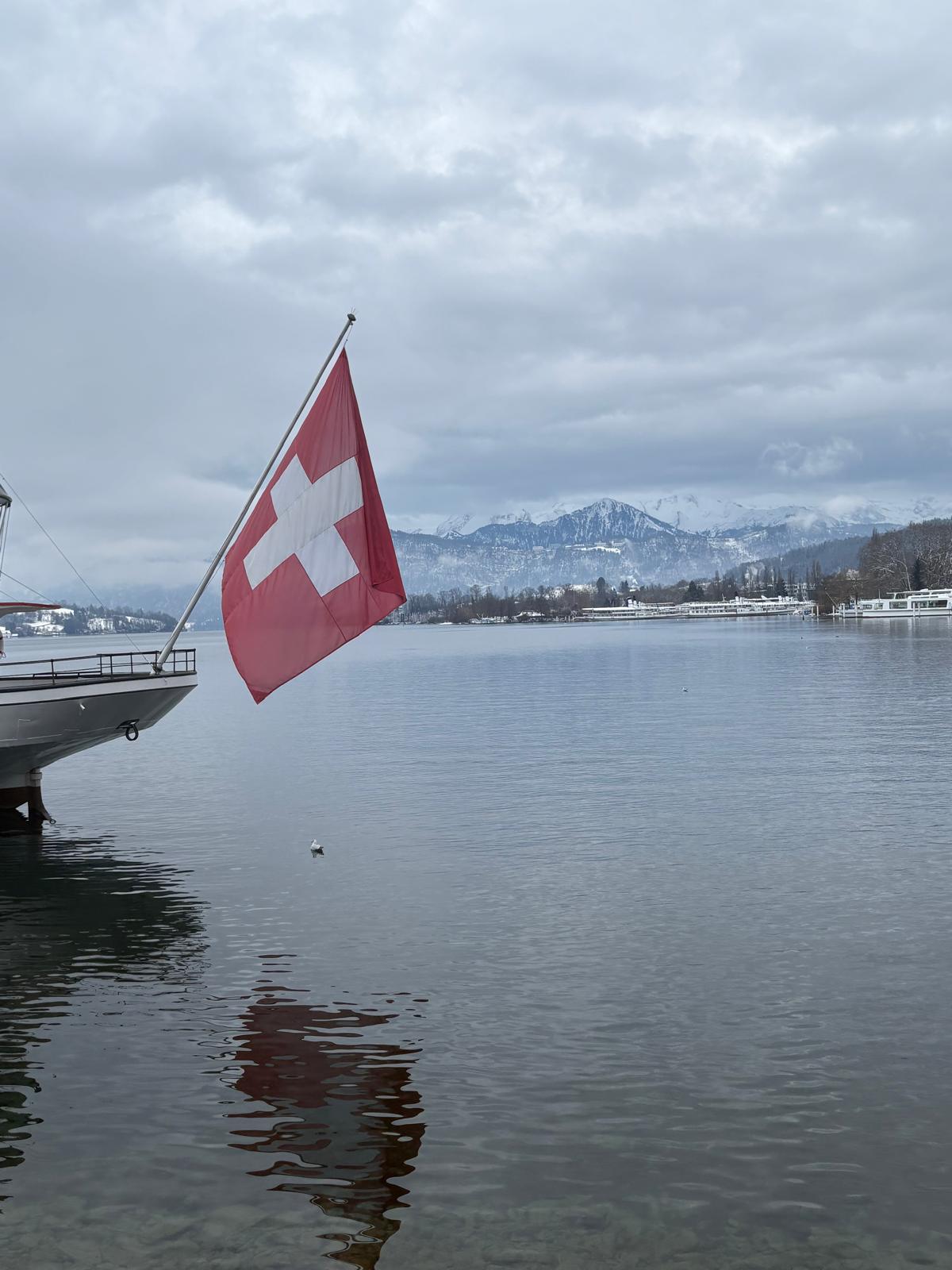
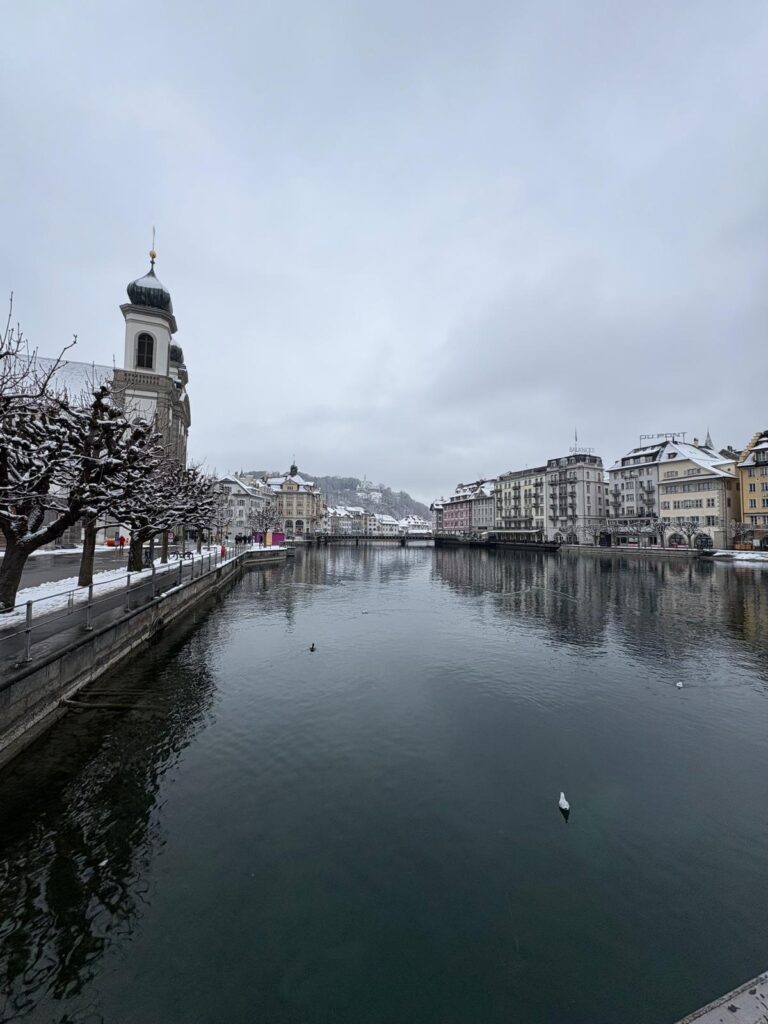
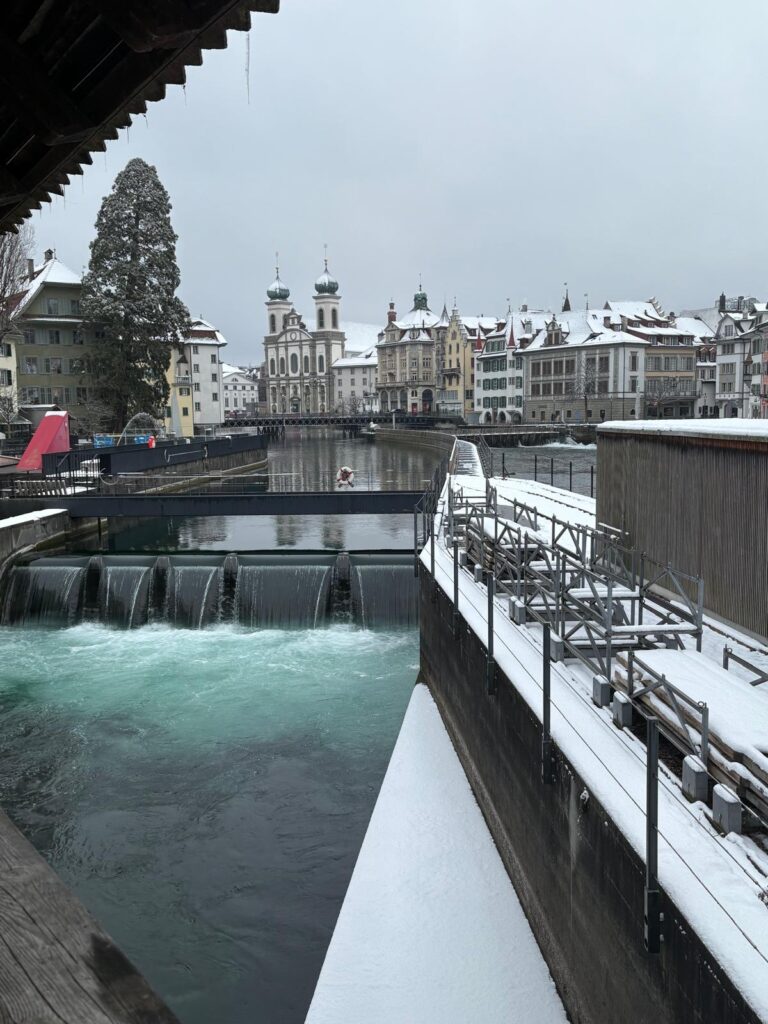
We arrived in the middle of winter, in January, when the air was crisp and light snowflakes gently covered the already charming scenery. The lake reflected the soft light of the surrounding mountains, creating a calm and almost magical atmosphere. Walking through the old town felt surreal — colorful buildings, quiet streets, and the gentle sound of water flowing through the city.
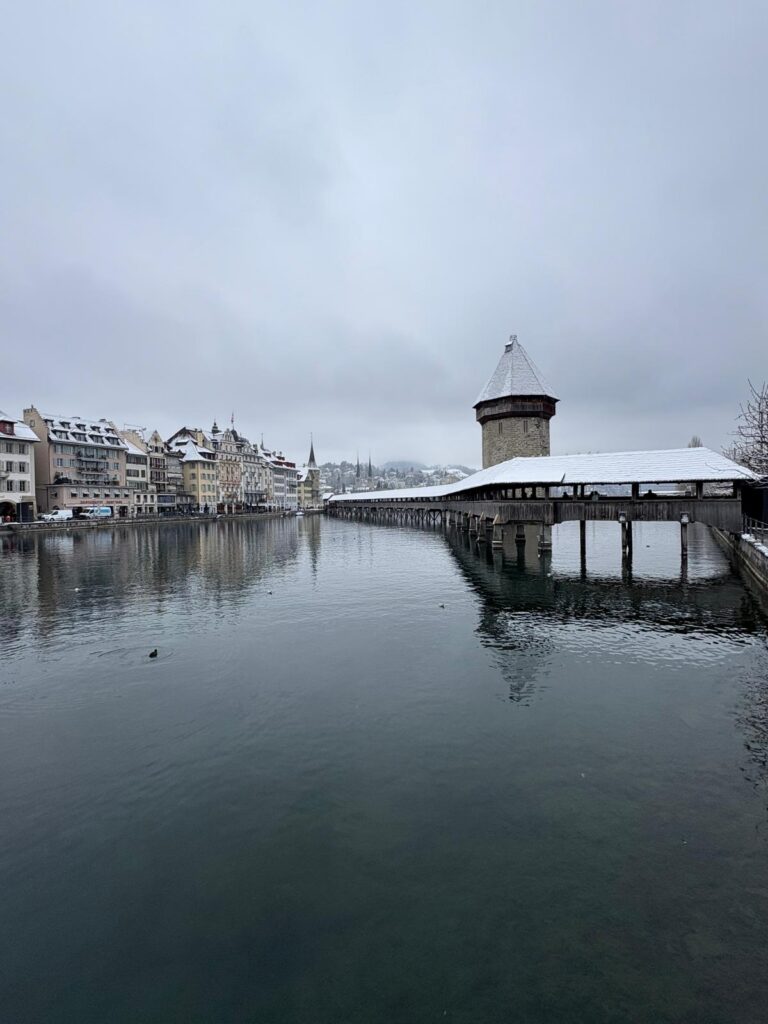
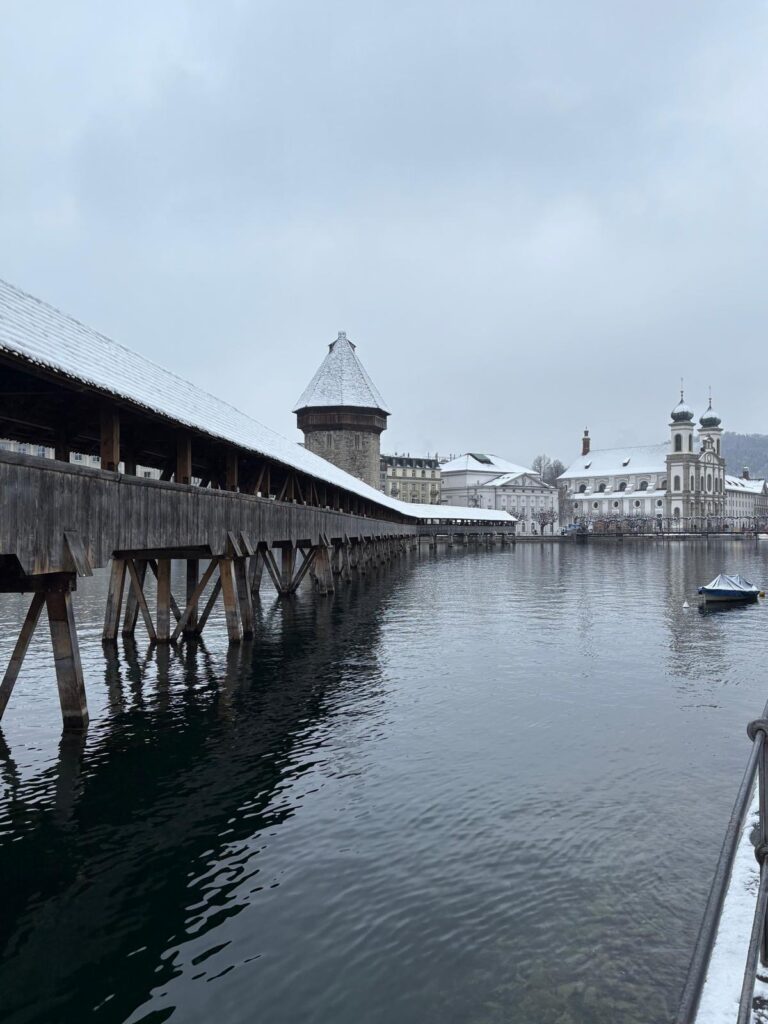
Then we saw it: the iconic Kapellbrücke or Chapel Bridge.
Built in 1333, this is the oldest covered wooden bridge in Europe. Stretching across the Reuss River, it looks like something straight out of a fairytale. At night, softly illuminated by lanterns, the bridge becomes even more magical, which is why some visitors even call it the “Harry Potter bridge.”
Lucerne is one of those rare places that feels both grand and intimate at the same time — a city small enough to explore on foot, yet filled with views that constantly take your breath away.
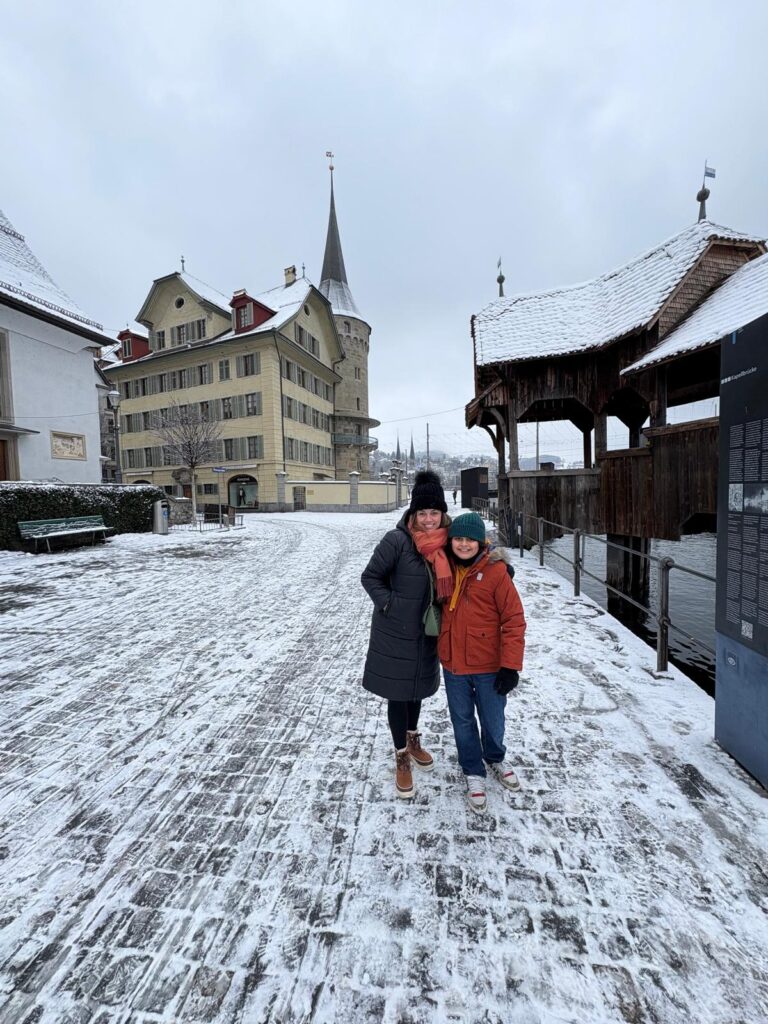
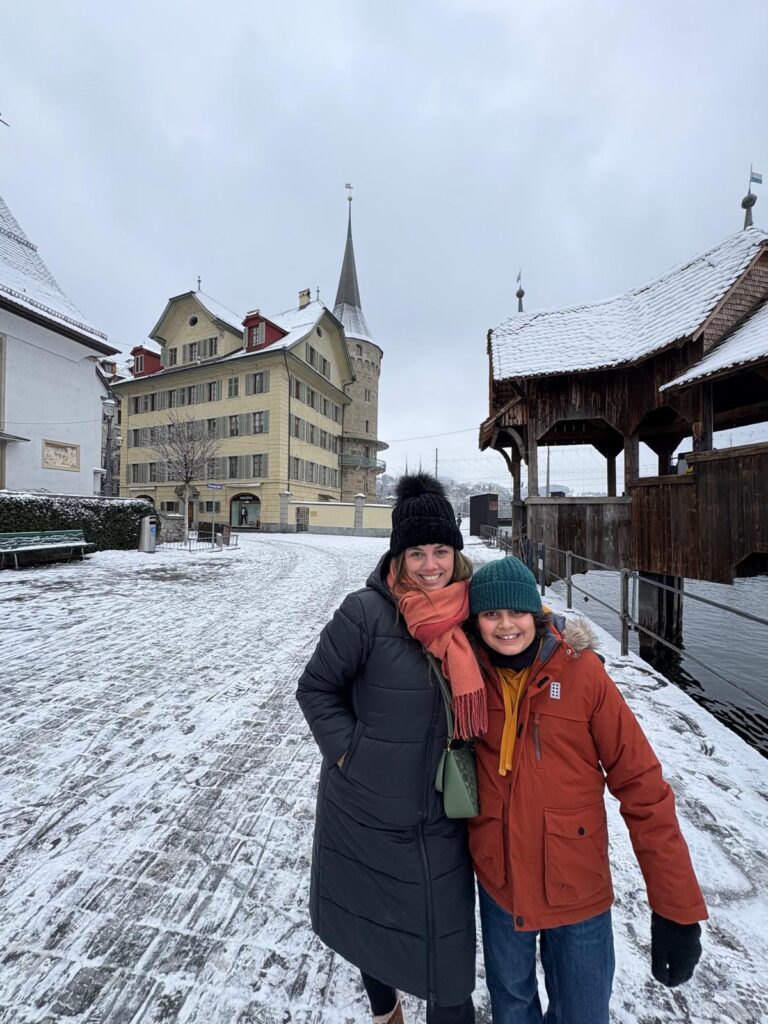
It was freezing cold during our visit, but nothing stopped us from exploring the city and enjoying the snow. We even had a spontaneous snowball fight near the lake. We crossed the Chapel Bridge slowly, stopping every few steps to admire the scenery reflected in the water.
From almost everywhere in town, you can spot the dramatic alpine peaks surrounding the city, including Mount Pilatus, one of the most iconic mountains in the region.
We continued our walk along the shores of Lake Lucerne until reaching one of the city’s most moving landmarks: the Lion Monument.
Carved into a sandstone cliff between 1820 and 1821, the sculpture depicts a dying lion and commemorates the Swiss Guards who were killed while defending the Tuileries Palace during the French Revolution in 1792.
Not far from the lake, another landmark caught our attention. Sitting slightly elevated above the old town is the beautiful Church of St. Leodegar.
To reach it, we climbed a series of outdoor stairs leading from the street up to the church grounds. Built in the 17th century after a fire destroyed an earlier Gothic structure, this Renaissance-style church is considered one of the most important churches in Switzerland. Inside, you’ll find intricate woodwork, ornate choir stalls, and an impressive historic organ. Outside, the peaceful cemetery surrounding the church offers a quiet place to pause and take in the view over the city.
But wherever you go in Lucerne, one element constantly draws your attention: the lake.
Lake Lucerne is undoubtedly the highlight of the city. The lake stretches across four Swiss cantons — Lucerne, Schwyz, Nidwalden, and Uri — creating a dramatic fjord-like landscape framed by mountains.
As we left Lucerne and followed the scenic road hugging the lake’s shoreline, we passed through enchanting villages like Vitznau, Weggis, and Brunnen.
Each one felt like another scene from a storybook — colorful houses right by the water, mountains towering above, and that unmistakable Swiss sense of calm. We stopped several times at viewpoints to take photos. Weggis, known for its mild microclimate, even has flower-lined promenades, while Brunnen’s harbor is perfect for a short walk or a quick ice-cream stop.
The origins of Lucerne’s name are also fascinating. The city traces its roots back to the 8th-century Benedictine monastery of St. Leodegar, originally called Luciaria. Some historians believe the name may come from the Latin lucius (a type of pike fish common in the Reuss River), while others link it to lucerna, meaning lantern — perhaps symbolizing a guiding light for travelers crossing the Alps.
Lucerne also has a long history of resilience. The city’s main train station burned down in 1971 and was rebuilt in 1991, while the famous Chapel Bridge suffered a devastating fire in 1993. Both landmarks were carefully restored, showing how the city preserves its heritage while moving forward.
Lucerne is undeniably charming and one of the most picturesque cities we’ve visited in Switzerland. That said, it’s the kind of place that feels perfect for a once-in-a-lifetime stop.
Would we roam again?
Perhaps — especially to explore more of the stunning landscapes surrounding Lake Lucerne.
Sometimes the most beautiful journeys are the ones that lead you just a little further.
How to plan and roam too
Best time to visit
Lucerne is beautiful year-round, but each season offers a different atmosphere. Winter brings snow-covered mountains and a magical alpine feeling, while spring and summer are perfect for lake walks, boat rides, and flower-lined promenades.
How long to stay
One to two days is usually enough to explore the old town, walk around the lake, and visit the main landmarks like Kapellbrücke and the Lion Monument. If you plan to visit the surrounding mountains, consider staying longer.
Don’t miss the lake promenade
Walking along Lake Lucerne is one of the best ways to experience the city. The views of the water with the mountains in the background are simply unforgettable.
Explore the surrounding villages
If you have a car or some extra time, drive along the lake and visit charming nearby villages like Vitznau, Weggis, and Brunnen. Each one offers beautiful viewpoints and a peaceful Swiss atmosphere.
Dress for the weather
If you visit in winter like we did, temperatures can drop well below freezing. Bring warm layers, gloves, and comfortable shoes, especially if you plan to walk around the old town and the lake.
Arrive early at popular spots
Places like Kapellbrücke can get quite busy during the day. Early morning or sunset are the best times to enjoy the bridge with fewer crowds and softer light for photos.
Original text – not consider for posting
Imagine a city where medieval wooden bridges cross turquoise waters, where snow-covered mountains frame the horizon, like they are embracing the city. Truly like a scene from a storybook.
That was our first impression of Lucerne. It was clear why Lucerne is often called one of the most beautiful cities in the world (and can only agree—it’s nicknamed Switzerland’s “pocket-sized gem”).
We arrived in the middle of winter in January, when the air was crisp, snow was falling down covering the whole charming scenery and the lake reflected the soft light of the mountains. Walking through the old town felt almost surreal — colorful buildings, quiet streets, and the gentle sound of water surrounding the city.
Then we saw it: the iconic Kapellbrücke or Chapel Bridge. Built in 1333, the oldest covered wooden bridge in Europe stretches across the river like something out of a fairytale. Fun fact, the bridge has a nickname: some call it the “Harry Potter bridge” for its magical, lantern-lit look at night!
Lucerne is one of those rare places that feels both grand and intimate at the same time — a city small enough to explore on foot, yet filled with views that take your breath away.
It was so cold, but nothing stopped us from exploring the city and playing with the snow (we even had a snow battle next to the lake). We crossed the Chapel Bridge softly, enjoying every angle that delivers all the beauty seen through the lake. We took some time to admire the iconic peaks like Pilatus. Then we bordered the lake until we reach the area of The Lion Monument (Löwendenkmal), a massive dying lion carved into a sandstone cliff in 1820–21, honoring the Swiss Guards killed defending the Tuileries Palace during the French Revolution in 1792.
There we were intrigued by a beautiful church situated on a small elevation just above the lakeshore and old town, where we climbed a series of outdoor stairs from street level to reach the entrance and the grounds. There was the Church of St. Leodegar, a Renaissance-style church (built in the 17th century after a fire destroyed an earlier Gothic one). Inside, you’ll find ornate woodwork (pulpit, choir stalls, and a famous large organ), and it’s considered one of Switzerland’s most important Renaissance churches. Outside the church, we spent some time in the cemetery rounding the construction.
But wherever you go in the old city, there it is capturing our attention. The lake is for sure the highlight in Lucerne. It stretches into four cantons (Lucerne, Schwyz, Nidwalden, and Uri), creating a dramatic fjord-like landscape that’s breathtaking.
As we left Lucerne and hugged the shores of Lake Lucerne, we passed through enchanting little villages Vitznau, Weggis, and Brunnen. Each one felt like a storybook scene—colorful houses right on the water, mountains towering above, and that perfect Swiss calm. We pulled over at viewpoints for photos—the mild microclimate in Weggis means flower-lined promenades even in cooler weather, and Brunnen’s harbor is perfect for a quick leg-stretch or ice cream stop.
Some curiosities about Lucerne
The city’s name origins are intriguing: It comes from the 8th-century Benedictine monastery of St. Leodegar (called Luciaria). Theories link “Lucerne” to Latin “lucius” (pike fish, common in the Reuss River) or “lucerna” (lantern)—perhaps as a “light” for travelers through the mountains.
Lucerne has a resilient history with fires: The main train station burned down in 1971 (rebuilt in 1991), and the Chapel Bridge fire in 1993 shows how the city bounces back while preserving its heritage.
Roam again?
Although it’s charming and we loved it, it’s one of those cities that it’s worth once in a lifetime. We would roam again in case we would explore something else in the neighborhood.
Deixe um comentário